

A Forwarder’s Bill of Lading / House Bill of Lading (HBL) is issued by a freight forwarder that holds a Non-Vessel Operating Common Carrier (NVOCC) qualification. The counterpart to this is the Master Bill of Lading (MBL), which is issued by the actual carrier (such as a shipping company or airline). However, a HBL cannot serve as a document of title, to take delivery of the goods, owner of HBL must change it into MBL with the actual carrier for a Delivery Order (D/O). It is important to note that a House Bill of Lading also holds legal validity.
Here, we must pay attention to one point: not every freight forwarder has the qualification to issue a House Bill of Lading. Only forwarders with NVOCC qualifications can issue such bills, and their bill of lading format must be registered with the relevant authorities in the destination country (or be compliant with local regulations) before it can be used. (Shenzhen Worldfly Logistics has this NVOCC qualification.)
Let’s continue by looking at several scenarios in practical operation where the use of a House Bill of Lading (HBL) is necessary.
I. To control the title of goods
- The most common scenario is with specified/forwarder-controlled shipments. On the MBL, the consignee and shipper are filled in as the freight forwarders at the port of loading and the port of destination. However, on the HBL, the actual seller and buyer are listed. As a result, the goods are effectively under the control of the freight forwarder of both ports. This control over the title of goods minimizes the risk of the overseas agent not receiving the freight charges. However, this is a double-edged sword. In cases where an HBL is used under FOB terms, there is a potential risk of the goods being released without presentation of the original HBL by the overseas agent.
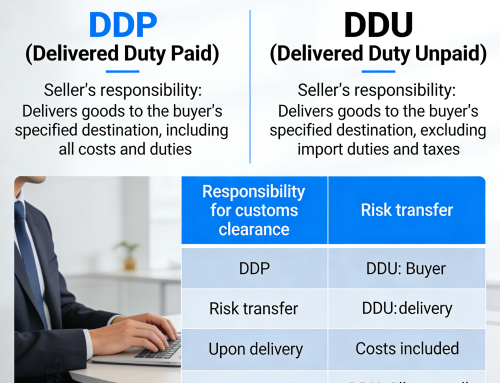
- When operating under DDU/DDP terms. Since destination port forwarders are required to provide services such as customs clearance and trucking, listing the agent as the consignee on the Master Bill of Lading (MBL) ensures smoother overall operations. Additionally, as these are prepaid terms where freight charges must be settled at the port of loading, the origin forwarder can, in principle, notify the destination agent to arrange delivery only after receiving payment from the shipper. This also serves as a measure to retain control over the goods.
- In the case of Less-than-Container Load (LCL) shipments. Because the container needs to be devanned and the goods sorted at the destination port, the Master Bill of Lading (MBL) will display the information of the LCL consolidators at both the origin and destination ports. Upon the container’s arrival at the destination port, the agent there holds the right to take delivery of the container, devan it, and sort the goods. The actual consignee then presents their House Bill of Lading (HBL) to retrieve the specific goods indicated on their bill.

II. When the Bill of Lading needs to display special information
- Under Letter of Credit (L/C) terms, there are often restrictions on the Bill of Lading’s content, requiring specific information and clauses to be shown. If the Master Bill of Lading (MBL) does not permit such displays, issuing a House Bill of Lading (HBL) that includes the required content can be a solution to meet the bank’s document presentation requirements.
- Many freight contracts actually restrict the shipper and consignee information on the Master Bill of Lading; the contract’s special rates are only valid if specific named parties are shown. To take advantage of these contract rates (“contract sailing”), a House Bill of Lading is issued to show the actual shipper and consignee, while the MBL complies with the contract terms.
- For an Anti-dated Bill of Lading, a Letter of Credit will stipulate a latest shipment date. If the actual sailing date exceeds this deadline, the bank will consider it a discrepancy. This not only incurs additional fees but also makes amending the L/C very cumbersome. In this situation, a House Bill of Lading can be used, with the shipment date adjusted to fall within the required period. For example, when exporting from China to Southeast Asia, the sea transit time is short. If the vessel arrives during a holiday period, there might not be enough time to apply for and mail the Certificate of Origin. By using an HBL, we can “lock in” an earlier shipment date, allowing the Certificate of Origin to be issued in time. However, issuing an anti-dated Bill of Lading carries risks and should only be done with the foreign customer’s consent.




Leave A Comment